Showing posts with label expensive luxury homes. Show all posts

Tuesday, December 13, 2011

For sale manor house and estate Dordogne Perigord Sarlat, AQ 24200 France

Photo of For sale manor house and estate Dordogne Perigord

About This Property

15th century manor house and estate in Périgord. Built in 1470, at the end of the Hundred Years' War on the site of an old strong house, this property was handed down through the women of the family as a form of dowry. Near Sarlat, set in 40 hectares of hilly land, with its lauze stone roofs and beautiful proportions, it typifies the architecture of Périgord Noir. The current property has been cleaned and luxuriously restored. Approximately 400 sqm of living space including 6 bedrooms and 6 bathrooms. Beautiful reception rooms and vaulted cellar. Possibility of extending. Garden, lake, spring and pool.

View more information about this property J. de La Fontaine Immobilier Sotheby's International Realty

Amenities
3+ Fireplaces
Gardens
Hardwood Flooring
Marble Countertop
Staff Quarters
Terrace / Outdoor Space
4 Car Garage
Lake


Friday, December 9, 2011

There's About To Be A Massive Real Estate Crash In Central Europe

Prague czech republic
Banks with big exposure to Central European real estate are essentially insolvent, but this is masked because they have not revalued the underlying assets, industry sources say.

However, with many loans issued in the boom years ahead of the crisis coming up for refinancing and a pullback in funding of regional subsidiaries, these banks could finally be forced to act.

While politicians across Central Europe talk up the stability of the banking sectors in their country, hoping to head off the risks to economic growth from lowered funding from the Western banks that dominate most markets, there's a potential time-bomb ticking away on the balance sheets of the local units – one that could total €1.5 trillion ($2 trillion).

Much as anticipated, a distressed-asset feeding frenzy never materialized in the region's real estate sector during the first phase of the crisis, because the banks thought they could get through to the other side without having to take losses on the over-leveraged sector. Now it looks like that was merely a postponement.

One real estate industry player says that in contrast to the trend seen in 2008, some banks in the region are becoming very aggressive in instructing borrowers to sell projects to catch up with their commitments. With much of the five- to seven-year debt issued in the boom years about to come up for refinancing, "the next 12 to 18 months will be very interesting," he suggests. "It's difficult to say how it will pan out."

Rock and a hard place

The banks in the region are caught on the horns of a dilemma. The same loans that were quietly left to their own devices during the first phase of the crisis in 2008 are now coming up for refinancing, so continued inaction is not an option. Yet the banks will struggle to approve new loans for the region's beleaguered developers.

However, the option of enforcing their claims on the assets underlying non-performing loans (NPLs) could lead down a very rocky road. The banks' previous inaction meant they could simply keep the valuations of the assets unchanged. Enforcing the contracts would see those valuations plummet to current market rates. One Austrian banker who declined to be named suggested: "Every Austrian bank with significant exposure to CEE real estate is essentially insolvent – they just haven't reassessed the valuations on their balance sheets."

Claims the real estate industry player: "The banks are absolutely terrified of doing that exercise."

That's understandable if Deloitte is correct in its analysis. The consultant's Czech real estate practice estimates that the property sector in CEE faces a "huge refinance hurdle of €1.5 trillion," adding that the Austrian banks are set to cut their exposure. "[The] banks are in control of huge portfolios of 'underperforming' files," Deloitte's analysts say in a report.

The credit ratings agencies are also concerned. On December 1, Moody's Investors Service changed its outlook on the Czech banking system from stable to negative, suggesting "the banks' operating environment will weaken, amidst a broader EU economic slowdown… over the next 12-18 months." Moody's took similar action on Polish banks in mid-November.

Of particular worry in the Czech Republic, on top of rising levels NPLs, are "high levels of concentration in the loan books… including… continued asset concentrations in the corporate segment, especially in commercial real estate," Moody's says.

Figures from the Czech National Bank show that NPLs in the sector have steadily risen to 7.0% of total loans in the last six months. However, the share of commercial real estate loans in that total has risen dramatically. At 10.5% of NPLs, the sector's share hit double figures for the first time in the last decade in June 2010, a ratio which remained steady to May. However, in June they suddenly leapt to 12.4%, and have since climbed each month to leave them standing at 13.6% of total NPLs in October.

Petr Bittner of Czech bank Ceska Sporitelna insists that while he "wouldn't dispute the claim of the Austrian banker," the danger, to the Czech sector at least, is not imminent. While the exposure of the country's banks to commercial real estate did bump up slightly in the boom of 2006, it has remained close to the current 11.9% of total loans – equivalent to around CZK270bn (€11bn). Meanwhile, he says, keen oversight from the Czech National Bank (CNB) has helped the sector into a position of resilience, with a capital ratio of 15%. "I don't see any significant threats resulting from exposure of the Czech banking sector to commercial real estate," he says, adding that he doesn't "expect any significant growth of loan volumes to be rolled over.

Meanwhile, Bittner says Czech banks have, give or take, CZK180bn of "capital surplus", and can face losses up to this level without the necessity of having to raise capital.

However, the banks are hardly in the same sort of rude health in every country in the region. For instance, the effect of the regulatory issues in Hungary are well known, and Raiffeisen Bank International worries that "some of the buffers that have served the CEE economies (especially in Southeast Europe) to withstand the global crisis, have been depleted."

Running out of options

The preferred option of the local banks over the next year or two would clearly be to restructure or roll over the current debt and quietly wait it out once more, with the assets left on their balance sheets at what are now inflated valuations. Bittner says "even if the need for rollover does grow, Czech banks still have (and will have) the resources to do that. The threat of liquidity squeeze from parent banks is possible, but the regulatory rules of the CNB are quite strict, and it's not so easy to transfer liquidity surplus across the board."

However, the constraints on cross-border funding from Western European parent banks are well documented. During the 2008 crisis, the region's banks had their funding flows protected by parents by the Vienna initiative; in November this year, Austria's banking regulator launched what is effectively the "anti-Vienna initiative," which will force local units owned by Austrian banks to rely almost completely on their own funding to continue lending. For a regional banking sector that has one of "the highest dependency on cross-border banking and on Western European banks in particular," as analysts at Raiffeisen put it, this arrangement will likely complicate the situation.

Even Marek Belka, governor of the National Bank of Poland, who led the objections to Moody's change to its outlook on the country's banking sector, admitted that this presents the region's banks with a major question. "Half of short-term financing to Polish subsidiaries from European parents matures in 2012," he pointed out. "Will they want to finance their unit on the same terms?”

Rolling over loans to real estate borrowers in particular could prove even more difficult, says one analyst. "What if the local units are being told to cut their exposure to the sector in CEE, as is very likely?" he asks.

At the same time, Raiffeisen analysts worry that high and persistent NPLs could turn into a drag on economic growth. "If NPLs are continuously rolled over, capital is locked up in unprofitable activities," they note.

However, the second option – to pull the plug – looks even worse. In that case, seized assets would go to auction and the banks would receive cash sums that are a fraction of the valuations for the underlying assets on their balance sheets. Yet leave it too long, and they could be forced to accept far less still should borrowers go bankrupt.

This risk could see more lenders follow the example of Ireland's National Asset Management Agency (Nama), which was originally set up in 2009 to deal with the toxic assets of banks taken over by the state. In Central Europe, Nama – whose assets have already been written down – has become increasingly aggressive even on some of the better assets, claims the real estate source. "It seems to be coming to the crunch for the Irish developers in the region," he suggests. "Anglo-Irish has been looking at enforcement options since the spring. This is going to force the Irish developers in the region to the wall."

Perhaps the best option for all involved would be the arrival of opportunist buyers and lenders – assuming they will be prepared to offer prices that will keep the wheels turning. That remains "a key block" according to Deloitte, but the region's large private financial groups - PPF Group, J&T Group, Penta Investments, and the recently ravenous Czech Property Investments – are said to be on the prowl for acquisitions.

At the same time, distressed debt funds are sniffing around the region. One group recently advised local service providers that it is interested in "buying discounted senior debt," suggesting "some of the portfolios coming from the… Western European banks pulling out of CEE markets could be of interest

Tuesday, December 6, 2011

2000 Little Raven St, 1F Denver, CO 80202 United States

Photo of 2000 Little Raven St, 1F
Photo of 2000 Little Raven St, 1FPhoto of 2000 Little Raven St, 1F
Photo of 2000 Little Raven St, 1F

Photo of 2000 Little Raven St, 1F

One of Denvers most premier lofts in the desirable project -The Flour Mill. This one-of-a-kind loft boasts incredible living, entertaining and work space within 3,724 sq feet, three levels and all silos. Direct elevator access opens into a grand space with 16 ft. ceilings. The professional chefs culinary kitchen has it all from the Wolf 8- burner gas cooktop with grill and griddle, and Wolf electric double ovens, to the Sub-Zero dual refrigerator and freezer and 150-bottle Sub-Zero wine refrigerator. With more than 22 ft. of Boos butcher block and Brazilian Blue Bahia Sea granite, the workspace is sufficient for prep, cooking and entertaining at the same time! The flexibility of the space is endless, outside of the main living area of the living room, kitchen and dining room there could be 3 to 4 bedrooms, 3 to 4 bathrooms, office, family room, or bonus room. Outdoor living and entertaining is viable on a 30 ft. x 10 ft. terrace deck.

Amenities
Hardwood Flooring
Mountain Views

Monday, December 5, 2011

Holiday Movie Homes

he holiday season generates thoughts and memories relating to families and the home, so it’s no wonder many holiday-centric movies so prominently feature a home.

Some of these beloved homes are figments of set designers’ imaginations. The mundane two-story suburban home of “National Lampoon’s Christmas Vacation” was a set, and even the lovely stone farmhouse from the 1945 romantic comedy “Christmas in Connecticut” was a set.

Slideshow: Where Have I Seen That House? Holiday Edition
Slideshow: Homes for the Holidays

Yet, some of the familiar homes featured in beloved holiday movies are real houses, and avid fans often visit them on a yearly basis to relive the magic. These homes are located all over the country. One has been converted into a museum memorializing the film in which it appeared, and a few of the following holiday movie homes are even for sale.

Can you remember where you first saw these famous holiday-themed homes?

“Miracle on 34th Street”
Port Washington, New York

This Port Washington, NY home hasn't changed much in 65 years.
Photo: NassauCountyNY.gov

Perhaps no other house in this slideshow played such a vital role in the plot as this one. This is the very house that caused a young Natalie Wood in the original “Miracle on 34th Street” to cry out, “Stop, Uncle Fred, stop!” in one of the final scenes of the classic film. While on a drive with Fred and her mother Doris, little Susan Walker spotted the house of her dreams — a simple Cape Cod on a small hill that was for sale. From there the movie was one running and squealing little girl — and Kris Kringle’s telltale cane propped by the fireplace — away from the grownups pretty much deciding to buy the house, leading to a very happy ending.

The exterior of the charming Cape Cod on Long Island is nearly the same 65 years later, except for the addition of a dormer window.


“Home Alone”
Winnetka, Illinois

This lovely Winnetka, IL home remains for sale.
Photo: Coldwell Banker | HomeAloneHome.com

Earlier this year, the “Home Alone” house defended from burglars by the movie’s main character Kevin, played by Macaulay Culkin, went up for sale for the first time since the filming of the 1990 family comedy.

The asking price in May was $2.4 million, but it has since been reduced to $1.95 million. In addition to having that grand stairwell, perfect for cruising down on a sled, the three-story home sits on half an acre of land, and has four bedrooms, three baths, and two half-baths.


“Elf”
New York, New York

This Park West, NYC building was one key setting for Elf.
Photo: Trulia.com

“Elf” is another holiday film with a very memorable setting. Overgrown North Pole-raised “elf” Buddy suddenly finds himself living in prime real estate on the Upper West Side overlooking Central Park. (If the Art Deco exterior of this building looks familiar, it was also used in “Ghostbusters,” where it was the gateway for Zuul.)

The interiors pictured here are from a comparable apartment, in the same 1929 Central Park West building, which was recently on the market for $2.895 million. That price fetches three bedrooms (two corner bedrooms, one “maid’s quarters,” or giant elf quarters), a step-down living room, eat-in kitchen and herringbone-pattern wood floors.


“A Christmas Story”
Cleveland, Ohio

This famous movie home in Cleveland, OH is now a museum.
Photo: A Christmas Story House & Museum | © Turner Entertainment

Much like the film itself, which tells the timeless tale of nine-year-old Ralphie Parker’s quest for a Red Ryder BB gun, the story of how the home featured in the movie became a museum devoted to the film is heartwarming. In 2003, when Brian Jones was disappointed he didn’t make it into Navy flight school, his parents sent him a homemade version of the film’s iconic leg lamp as a consolation prize. That prize turned into a career for Jones. After getting lots of positive feedback about his lamp, he decided to sell them. When the house used in “A Christmas Story” went up for sale on eBay the following year, Jones bought it for $150,000.

Many of the interior scenes of the movie were shot on a soundstage, so Jones had to spend an additional $240,000 to renovate the house to match the sets. He opened the Christmas Story House and Museum in 2006. Variety reported it attracts 30,000 to 35,000 visitors a year, and Jones sells all manner of related merchandise, including about 5,000 leg lamps in various incarnations per year.


“It's a Wonderful Life”
Flintridge, California

This home appears in one scene of the Christmas classic movie.
Photo: Google Street View

The house pictured here is certainly not the one most associated with the 1946 Christmas classic, “It’s a Wonderful Life.” In fact, it only appears in one scene. In the film this house is located in main character George Bailey’s Bailey Park development, and is the new home of the Martini family and their various children, dog and goat.

The house was new at the time of filming and from the outside, at least, it appears unchanged today. That’s more than we can say for nearly every other location for “It’s a Wonderful Life,” however, including the Bailey home and its broken Newell post, which is itself a character in the film. Most of the movie was shot at RKO studios or RKO Ranch, which had a four-acre Bedford Falls set, razed in the 1950s. The only other remaining location from the film is the Beverly Hills High School gymnasium featured in the dance scene, with the floor that opens up to a swimming pool.

Gwen Stefani Home Primrose Hill, North London U.K. !!! Gwen Stefani House !! Gwen Stefani Home

U.K. Homes Of U.S. Celebrities
© Malibu Media/AP

Gwen Stefani
Location: Primrose Hill, North London

After marrying Gavin Rossdale, the former lead of British rock act Bush, the California-born singer lives in this fashionable area between well-heeled Hampstead and London Zoo. Primrose Hill boasts some of the most expensive homes in London, its electoral roll reads like a who's who and it is fast becoming the British Beverly Hills. Other residents include Liam Gallagher and Stella McCartney.

108 Giant Chinese Infrastructure Projects That Are Reshaping The World

Vivian Giang and Robert Johnson

China

Image: wikipedia commons

There's an old Chinese saying that goes: “If you want to be rich, you must first build roads.”

And, boy, have they built some roads: In the past year, we've seen the world's longest sea bridge, the world's longest gas pipeline and a high-speed railway that's left everyone else in the dust — literally.

The resultant infrastructure push is incredible. A list of 108 super projects is floating around Chinese message boards and we picked out the 45 coolest ones to showcase here.

From highways spanning the continent, to the largest wind power base in the world, to a modern Silk Road that links Europe and India, to new cities in the desert, China is showing what it really means to do big things.


$102 MILLION: The Pingtang telescope will be the world’s largest radio telescope when completed in 2016

$176 MILLION: Shanghai Synchrotron Radiation Laboratory conducts China's major scientific projects and is the country's most expensive research facility

$176 MILLION: Shanghai Synchrotron Radiation Laboratory conducts China's major scientific projects and is the country's most expensive research facility

Image: sinap

$200 MILLION: The Guangzhou Opera House is one of the three biggest theaters in China, designed by architect Zaha Hadid

$368 MILLION: The Hainan power grid project is China’s first underwater cross sea power grid and will link the southern island of Hainan to mainland China

$473 MILLION: The Qinling Tunnel is longest highway tunnel in China

$473 MILLION: The Qinling Tunnel is longest highway tunnel in China

Image: CEN

$717 MILLION: The Kashgar-Hotan Railway connects all the cities and towns of the southwestern Tarim Basin

$760 MILLION: China Central TV Headquarters is a loop of six horizontal and vertical sections covering 1,551,837 ft.

$900 MILLION: The Tianhuangping hydroelectric project is the biggest in Asia and plays a vital role in providing power supply in eastern China

$1.1 BILLION: The Shanghai World Financial Center Project is home to the second highest hotel in the world - the Park Hyatt Shanghai is on the 79th floor

$1.3 BILLION: The Baltic Pearl Project is China's largest foreign development project and consists of residential and commercial properties outside St. Petersburg, Russia

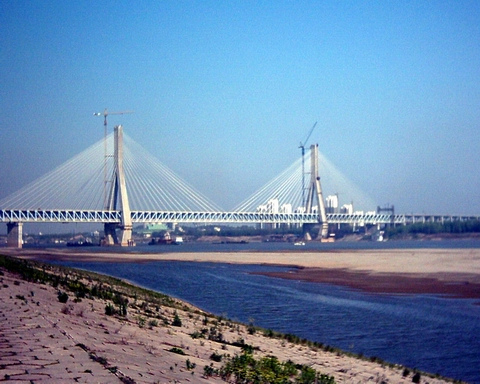
$1.7 BILLION: The Wuhan Tianxingzhou Yangtze River Bridge is a combined road and rail bridge across the Yangtze River in the city of Wuhan

$1.7 BILLION: The Nanjing Metro Line was completed in 2005 and is used by almost 180 million people a year

$1.8 BILLION: The Shanghai Yangtze River Tunnel and Bridge is the fifth longest cable-stayed bridge in the world

$1.9 BILLION: The Chengdu Shuangliu Airport will annually handle 35 million passengers

$2.12 BILLION: The Wuhan Railway Station serves the world's fastest trains at 217 mph

$2.2 BILLION: At 128 stories, The Shanghai Tower will be the tallest skyscraper in China and the second tallest in the world when completed in 2014

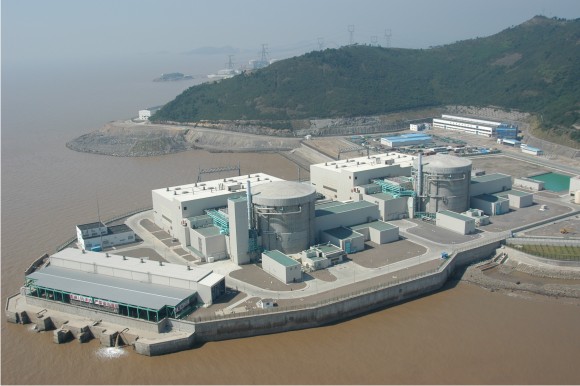
$2.2 BILLION: The Qinshan Nuclear Power Phase II will add to the Qinshan plant and have the most nuclear reactors of any site in the world

$2.88 BILLION: The Hongyanhe Nuclear Power Plant is the first nuclear power station in northeastern China and will reach 45 billion kWh annually

$3 BILLION: The Great Gabon Belinga iron ore mine is China's largest African mining operation

$3.3 BILLION: The Tianjin offshore drilling rig is China's national base for offshore oil development

$3.5 BILLION: The Beijing Capital International Airport Terminal is the largest single construction project in China and the third largest building in the world

$4.5 BILLION: Lingang New City, a planned city to be completed in 2020, will house almost 1 million people

$4.5 BILLION: Lingang New City, a planned city to be completed in 2020, will house almost 1 million people

$6.3 BILLION: The Xiangjiaba Hydro power Project is expected to be completed by 2015 and generate 31 billion kwh annually

$6.3 BILLION: The Xiangjiaba Hydro power Project is expected to be completed by 2015 and generate 31 billion kwh annually

Image: Skyscraper city

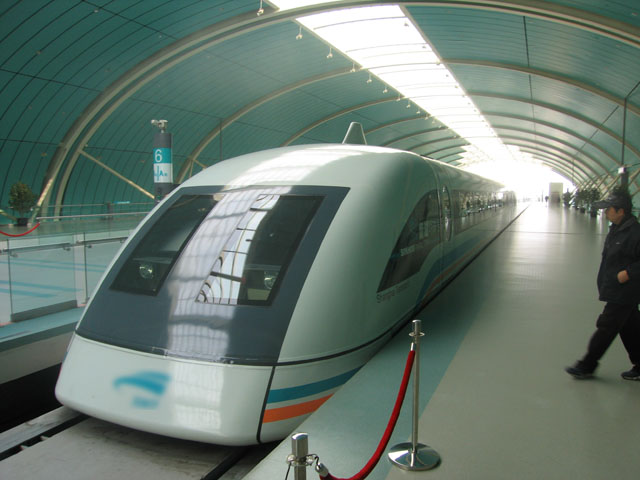
$5 BILLION:The Shanghai-Hangzhou maglev project will create the fastest inter-city train in the world at 280 mph

$6.3 BILLION: The Beijing South Railway Station is Asia's largest railway station

$6.3 BILLION: The Beijing South Railway Station is Asia's largest railway station

Image: Wikipedia

$6.5 BILLION: China is one out several countries that signed a contract to re-construct the ancient “Silk Road” linking China and India with Europe

$6.76 BILLION: Xiluodu Dam will be the third tallest dam in the world and second largest hydro-power station in the country.

$7.89 BILLION: The Su-Tong Yangtze River Bridge is the world's longest cable-stayed bridge

$7.89 BILLION: The Su-Tong Yangtze River Bridge is the world's longest cable-stayed bridge

Image: Wikimedia Commons

$8 BILLION: The Shanghai Yangshan Deep Water Port Project will handle the largest container ships in the world

$8 BILLION: The Shanghai Yangshan Deep Water Port Project will handle the largest container ships in the world

Image: Wikipedia


$8.3 BILLION: The Nigerian Railway Modernization Project is China's largest overseas project

 $8.3 BILLION: The Nigerian Railway Modernization Project is China's largest overseas project

Image: Chimac

$10.2 BILLION: The Yangjiang Nuclear Power Station in Guangdong province will be the biggest nuclear power plant in China

$10.2 BILLION: The Yangjiang Nuclear Power Station in Guangdong province will be the biggest nuclear power plant in China

Image: Wikimedia Commons

$10.2 BILLION: The Guangdong Yangjiang Nuclear Power Station will be China's newest power plant when completed in 2013

$10.2 BILLION: The Guangdong Yangjiang Nuclear Power Station will be China's newest power plant when completed in 2013

Image: CGNPC

$10.7 BILLION: The Hong Kong-Zhuhai-Macau Bridge project will connect two huge regions when completed in 2016

$12 BILLION: The Hainan Wenchang Space Center launch project will be the country’s newest launch center

$14 BILLION: The Harbin–Dalian High-Speed Railway will serve the first high speed train in northeast China

$16 BILLION: Hangzhou Bay Bridge is the world's longest cross-sea bridge project

$18.2 BILLION: The Jiuquan Wind Farm will be the largest wind power base in the world when completed in 2013

$23.1 BILLION: The Kunming New International Airport will be China's 4th largest aviation hub

With no room for expansion at the current Kunming Wujiaba International Airport, the local government decided to build a new airport tentatively called Kunming Xiaoshao International Airport. With the completion of the new Kunming, the old Kunming will be demolished and all operations will be transferred from the old to the new.

$33 BILLION: The Beijing Shanghai High Speed Railway is the world's longest high-speed rail project

$33 BILLION: The Beijing Shanghai High Speed Railway is the world's longest high-speed rail project

Image: M.I.C Gadget via flickr

$44 BILLION: China is one out of 32 countries who signed an agreement for the construction of highways to span the continent and reach Europe

$45.4 BILLION: The Ningxia’s Ningdong Energy and Chemical Industrial Base will double the province’s GDP and generate $30.3 billion after the planned 2020 completion

$45.4 BILLION: The Ningxia’s Ningdong Energy and Chemical Industrial Base will double the province’s GDP and generate $30.3 billion after the planned 2020 completion

Image: China

$62 BILLION: The South-to-North Water Diversion Project is expected to divert 44.8 billion cubic meters of water to the north by 2050

$62 BILLION: The South-to-North Water Diversion Project is expected to divert 44.8 billion cubic meters of water to the north by 2050

$306.7 BILLION: The "Turn the Pearl River Delta Into One" will result in an urban "mega-city" bigger than Wales

$306.7 BILLION: The "Turn the Pearl River Delta Into One" will result in an urban "mega-city" bigger than Wales

Image: busworld

$458 BILLION: The Tianjin Harbor Industrial Zone is one of the largest chemical ports in the world

Other Great Chinese Infrastructures worth mentioning

Other Great Chinese Infrastructures worth mentioning

Image: rikj via flickr

$2.6 billion: China's construction of the Libyan coastal railway project
$4.5 billion: Guangzhou Nansha Lair shipbuilding base project
$5.0 billion: Niger oil project
$5.4 billion: Changxing Shipbuilding Base will be the world's largest shipbuilding base project
$7 billion: Sudanese oil project
$7 billion: China's construction of the Algerian East-West Highway Project
$10.7 billion: Baosteel million-ton steel base project in Zhanjiang East Island
$11.7 billion: Rural Market Project
$20 billion: Portland Oilfield Sinopec investment
$26.8 billion: Tianjin ethylene project
$38 billion: Zhangzhou and Fuzhou-Xiamen railway projects
$77.5 billion: Super markets projects
$77.5 billion: Liaoning Hongyanhe Nuclear Power Project
$237 billion: State Environmental Protection Eleventh Five-Year Plan
$800 billion: Zhejiang Sanmen nuclear power project
$900 billion: Northern Energy and Chemical Base project
$1 trillion: Tianjin Binhai New Area investment

Even more are listed here.

Related Posts Plugin for WordPress, Blogger...

My Blog List

Contact US

celebrityhomeforsale@gmail.com

Share